Home>Christian Resources>Prayer For Family And Friends: 20 Best Prayers For Loved Ones


Christian Resources
Prayer For Family And Friends: 20 Best Prayers For Loved Ones
Modified: January 9, 2024
A prayer for family and friends is a powerful expression of love. Share one of these prayers to bring you closer with your loved ones.
(Many of the links in this article redirect to a specific reviewed product. Your purchase of these products through affiliate links helps to generate commission for Christian.net, at no extra cost. Learn more)
God makes Himself known to us through the people we keep in our lives. Bible verses about friendship even teach us that friends can be just as close as family, so we must be wise in who we choose to surround us with. Whether it is International Friendship Day or a regular day for family, we can thank the Lord for blessing us with the people around us by offering a prayer for family and friends. It is through prayer we are able to show love no matter where we are.
Of course, you can also turn your blessings into gifts to show your love for your family and friends. Custom pins are both decorative items that you can carry around with you and souvenirs that you collect exclusively! It can hold your sincere prayers. And it can always encourage your family and friends. You can customize the pins according to your own design and creativity, and have a blessing or a logo you trust imprinted on the pins. Give it to your loved ones and they will always receive your prayers when they wear it on their body.

As Psalm 133:1 teaches us, we experience greater joy and wonder when we honor God together. Offer a prayer for family and friends to help glorify God in unity.
1. A Thanksgiving Prayer For Family And Friends
The relationships we cultivate are all part of God’s plan for us. We can thank him through this gratitude prayer, offering our thanks for the blessings that are the people in our lives.
Dear God, thank You always blessing me with the people in my life. When I am down, they are always there to lift me up. I know that You make Your holy presence known in my life through them. I am never alone, because You are here with me through my loved ones. With so much gratitude in my heart, I offer You this prayer for family and friends in thanks. Thank You for showing me that love and care can be found anywhere, especially in the people in our lives, because I can now share my knowledge with those around me. Amen.

Image by Marina Helena Muller on Unsplash
Job 42:10 After Job had prayed for his friends, the Lord restored his fortunes and gave him twice as much as he had before.
Read more: 20 Best Bedtime Prayer For Kids
Prayers For Family
2. A Short Prayer For Family
Our family keeps us grounded, as they are the foundation of our home here on Earth. Offer this prayer for family and ask the Lord to look after our loved ones’ happiness and health, as prayer is one of the highest forms of love we can show those around us.
Almighty Father, I praise and glorify Your most holy name. Thank You for giving my family and I another day to enjoy the blessings You so generously provide us with. I offer this prayer to You, humbly asking that You continue to watch over my loved ones and protect them from harm. Please continue to keep their happiness in Your loving embrace. I pray for their good health so that they may continue to use their God-given gifts to spread Your good word. We are brought together through You, as our love for one another remains strong with You at the center of our hearts. Amen.

Image by Jess Zoerb on Unsplash
1 John 4:19 We love because he first loved us.
3. Family Prayer Before Meals
We must always thank the Lord showering us with blessings. Praying before meals is not only a show of thanks for the food on your table, it also brings your family closer together in harmony.
Dearest Lord, we thank You for blessing us with the food on our table today. We never go hungry because You always provide us with everything we need. Thank You for bringing us together today as a family, so that we may enjoy Your blessings together. We pray that we may continue to live like this, as a loving family who lives harmoniously in Your name. Our bellies will be full of this food, but it is our hearts that will be truly nourished by Your most loving grace. In Jesus’ name, we pray. Amen.
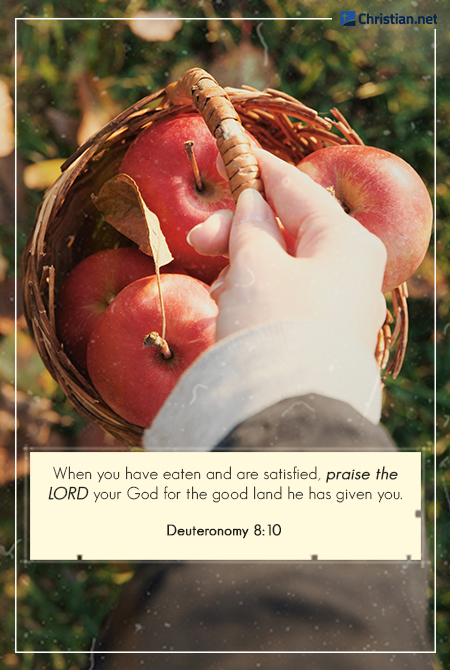
Image by Julia Kicova on Unsplash
Deuteronomy 8:10 When you have eaten and are satisfied, praise the LORD your God for the good land he has given you.
4. Prayer For Family Protection
Some families are separated by distance. Though not living under the same roof can be challenging, it only makes their faith in the Lord even stronger, as they lay their trust in Him that all will be alright. Remember: our families are always safe in God’s hands.
Dear God, I thank You for always keeping my family safe and protected from harm. Though we may not be together right now, I know that in our hearts, we continue to live out our faith as one strong unit. We are united in our faith, no matter how near or far we may be from one another. I pray that my family members continue to remain safe. With You always watching over us, I know that we are all under Your protective gaze, regardless of where we are in the world. Thank You Lord for being our protector. May we as one family never lose sight of Your guidance, as we are always safe with our faith in You. This I pray through Christ our Lord, Amen.

Image by Helena Lopes on Unsplash
Psalm 5:11 But let all who take refuge in you be glad, let them ever sing for joy. Spread your protection over them, that those who love your name may rejoice in you.
5. Family Prayer For Healing For A Family Member
The pain we feel as a family can be overcome with the unity we find in our faith. Offer this prayer when someone in the family is in need of healing, for only God provides the comfort and strength needed to ease our pain.
Most Heavenly Father, I come to You during this very painful time for someone in my family. As our greatest source of strength, they are especially in need of You now. Please grant them the fortitude and resilience they need in order to persevere through this very exhausting trial. I offer this prayer for them, so that the pain in their heart dulls into a throb that can be healed through Your loving grace. Glory to You, oh Lord. Amen.

Image by Richard Tao on Unsplash
Ecclesiastes 3:1-2 There is a time for everything, and a season for every activity under the heavens: a time to be born and a time to die, a time to plant and a time to uproot.
6. A Short Morning Prayer For My Family
The best way to start the day is with prayer. Offer this family morning prayer as you start the day, remembering to keep your family in mind as always.
Heavenly Father, thank You for granting me another day to live out Your will. I lift up this prayer to You as I start my morning with Your grace. Lord, I pray that my family remembers to start their morning with You as well. Please grant them the courage to face whatever trial they may encounter today. Lend them Your strength, so that they may get through their day peacefully, no matter how challenging it might be. Please bless them with Your Holy Spirit, so that they may never forget that no matter how difficult the day ahead may seem, anything is possible with You by their side. Amen.

Image by John-Mark Smith on Unsplash
Romans 12:9 Love must be sincere. Hate what is evil; cling to what is good.
7. Prayer For Family Peace
There are times when discord may arise and interrupt the peace in your family. Offer some prayers for peace in the family when conflicts get in the way to restore harmony during such troubling times.
Oh most glorious Lord, we come to You with conflicted hearts. Our family is going through a rough patch right now. Please Lord, forgive us for giving into the temptation of conflict. We do not mean to hurt each other, as there is only love in our hearts for one another. With this prayer, we ask for Your help in working together to restore the family peace. May we find forgiveness in our hearts for the pain we inflicted on one another. We pray that we may put this conflict behind us, so that we can work together as one family united in Your name. Amen.

Image by Matthew Gerrard on Unsplash
Romans 12:18 If it is possible, as far as it depends on you, live at peace with everyone.
8. Prayer For My Son
For parents who raise their sons to be humble and compassionate examples for others, offer this prayer to the Lord, that He may guide our sons towards the path of righteousness.
Lord in Heaven, thank You for the blessing that is my son. The older He becomes, the more I see how much Your grace resides in him. I pray that he may grow into a selfless man who puts others before him, without the need for prideful recognition. Please continue to guide him on this path You have set him on, for You are his greatest example to follow in life. May my son never forget that everything in this life is for You, oh Lord. I pray that beneath his brave face, my son marches on with the humility and compassion he learns from You. Amen.

Image by Lachlan Dempsey on Unsplash
Proverbs 23:15 My son, if your heart is wise, then my heart will be glad indeed.
Read more: The Most Comforting Prayers For The Dying
9. Prayer For My Daughter
Just like our sons, our daughters too are young leaders in the making as followers of Christ. Offer this prayer asking for God’s guidance, that He may continue to watch over our daughters as they grow into generous and selfless examples of the Lord.
Dearest Heavenly Father, thank You for the grace that is my daughter. She continues to exemplify You not just in her words, but more importantly, in her actions as well. I pray that she continues to live out Your will, for it is You who is her ultimate goal in life. Please continue to bless her with Your Holy Spirit, that she may be protected from harm and not lose sight of her ambitions. Lend her Your strength when times get rough, because I know she can achieve anything with You by her side. May she continue to grow into a lady whose heart dwells in Your arms, because everything we do, we act out in Your most holy name. Amen.

Image by Kelli McClintock on Unsplash
Proverbs 31:25 She is clothed with strength and dignity; she can laugh at the days to come.
10. Prayer For Guidance And Wisdom For My Parents
Our parents are one of our first teachers in life. However, this doesn’t mean they are no longer in need of God’s guidance and wisdom. Offer this prayer for them, so that they can find clarity whenever they feel lost.
Father Almighty, I pray that You continue to watch over my beloved parents. They led me to You, and they taught me how to live my life as Your faithful follower. Without them, I would not be as loved, supported, and cared for as I am today. Please grant them Your grace, for everyday we learn from You, regardless of our age. May my parents find the wisdom they seek through You, and may they always remember that You are always with them no matter where they are in life. This I ask through Christ Our Lord, Amen.

Image by Pat Whelen on Unsplash
Proverbs 4:11 I instruct you in the way of wisdom and lead you along straight paths.
11. Prayer For Good Health For My Parents
Our parents raise us to be God-fearing followers of the Lord. They watch over us and supplement God’s guidance in our lives. We pray for their good health, so that we may live a long life in faith with them.
Dearest Lord, thank You for blessing my life with my parents, for they led me to You. My faith continues to be fortified with their support, as together, we are a family of Your followers. I pray that You grant my parents good health, so that they may continue to live out Your will and spread Your good news. Heal them of any afflictions and ease their sufferings, oh merciful Lord. I pray that they overcome any challenges on their continuous journey through life, as they deserve nothing but Your love and grace. In Jesus’ name, I pray. Amen.

Image by BETZY AROSEMENA on Unsplash
Ephesians 6:1-3 Children, obey your parents in the Lord, for this is right. “Honor your father and mother”–which is the first commandment with a promise–so that it may go well with you and that you may enjoy long life on the earth.
EAD ALSO: 25 Prayers for Health and Healing
Prayers For Friends
Read more: Valentines Day Quotes For The One You Love
12. A Daily Prayer For Friends
The friends in our life can help us get through even the toughest of times. Offering a prayer for them can show them love in a quiet but meaningful way.
Dear God, thank You for the friends You have blessed me with. My days are filled with so much joy and love, because I know I can always turn to them. They are always here for me, for the good times and the bad. I pray that they can feel how much I love and appreciate them, even though I may not always say it out loud. Lord, please watch over my friends in their day to day lives. I know we are never without You, as You are the reason why this friendship has prospered so much. With this prayer, I ask that You continue to grace us with Your presence, for without You, this friendship would not be what it is today. Glory to God in Heaven. Amen.

Image by James Baldwin on Unsplash
1 Thessalonians 5:11 Therefore encourage one another and build each other up, just as in fact you are doing.
13. Prayer For Healing For A Sick Friend
As much as we want to help friends who are in need, sometimes there is only so much we can do for them. This is especially when we struggle to understand their plight. Pray to the Lord for their healing, for it is He who understands their suffering the most.
Heavenly Father, I pray to You asking for help. My dearest friend, who deserves nothing but joy, continues to carry on in spite of the pain in their heart. Their resilience is admirable, but this can only carry on for so long. Please Lord, watch over my friend. I pray that my friend’s heart will heal, slowly but surely, with You always by their side. I know that my friend can overcome their suffering, so long as they remember to seek You always. In Your most glorious name, I pray. Amen.

Image by Heather Ford on Unsplash
Psalm 147:3 He heals the brokenhearted and binds up their wounds.
14. Prayer For Comfort And Strength For A Friend
The challenging times before us can be intimidating sometimes. We may have some friends who are in more need of help than others during such troubling times. Offer this prayer for them, asking the Lord for the courage and strength necessary to overcome any challenges ahead.
Oh most gracious God, I lift up this prayer to You on behalf of my friend. They are about to face a very challenging trial that may test not only their capabilities, but perhaps even their faith in You as well. I pray that they remember to seek You out because it is You who is the most powerful source of strength any of us will ever need. Everyday we are reminded of Your miracles, both big and small. With this, I pray that my friend is reminded of Your glory, as any challenge can be overcome with Your Holy Spirit guiding us. Amen.

Image by Hans Isaacson on Unsplash
Proverbs 24:5 The wise prevail through great power, and those who have knowledge muster their strength.
15. Prayer For Wisdom In Friendship
We may not always make the wisest choices, especially when we are navigating new and foreign friendships. Bible verses for wisdom teach us that through the Lord, we can become more mindful of the new people we are still getting to know better.
Oh most gracious God, I offer You this prayer with the intention of fortifying a new friendship that I am still in the process of growing. With humility in my heart, I ask that You grant me wisdom as I navigate through this new friendship. I know mistakes are inevitable, but I want to do my very best in not hurting this new friend of mine. I pray that I may make the right decisions in this friendship, for the betterment of everyone involved in it. With the help of Your grace granting me wisdom, I know this friendship will flourish into another great manifestation of Your love all around us. This I pray in Your most holy name, Amen.

Image by Priscilla Du Preez on Unsplash
Proverbs 13:20 Walk with the wise and become wise, for a companion of fools suffers harm.
16. Hopeful Prayer For Faith For A Friend
Sometimes we may see our friends’ wavering faith in the Lord. Offer this prayer for hope for them, so that they may be reminded that with God’s works, miracles can take place in our daily lives.
Heavenly Lord, I praise Your most holy name. Today I seek guidance for my friend, whom I feel is beginning to be fed doubts by the evils around us. Please keep an eye on them, for I fear that their faith is beginning to stumble. They are one of Your most faithful servants, Lord, so I know this is but a fleeting moment of weakness. You are the brightest light in any darkness, so I know that they will find their way back to You. I know that with You, we can overcome anything, and I hope my friend is reminded of that. This I pray in Your glory, Amen.

Image by Jon Tyson on Unsplash
Hebrews 11:1 Now faith is confidence in what we hope for and assurance about what we do not see.
17. Prayer For Peace For A Friend
Offer this prayer to the Lord when a friend is in need of the peace that only He can provide. Our minds and hearts can always find serenity in God.
Lord in Heaven, I pray that You send down Your most Holy Spirit to help out my friend in need. Their mind is in turmoil and their heart is unsettled. I fear that their unease is beginning to cloud their faith, and I know only You can remedy this. Please grant my friend serenity and continue to hold them in Your loving embrace. I know that in Your arms, their fears and troubles will be washed away. You are our biggest source of comfort, and only You make us feel safe no matter where we are in life. I offer this prayer to You, Amen.

Image by Bannon Morrissy on Unsplash
John 16:33 I have told you these things, so that in me you may have peace. In this world you will have trouble. But take heart! I have overcome the world.
18. Encouragement Prayer For A Friend
One way of showing love and support for friends is by sharing words of comfort with them. Cheering them on doesn’t always have to be so vocal, as we can also do so through prayer.
Dearest God, I offer this prayer to You for my friend, who is in need of Your grace. They seem to feel a little lost in their endeavors. I feel like they are becoming discouraged and are on the brink of giving up. With Your blessings, I know they can achieve anything. So I pray to You today, asking for Your guidance. Please hold my friend’s hand as they re-center and find themselves again. You are our greatest ally, and with Your love and help, anything in the world is truly attainable. This I pray to You, oh Lord. Amen.

Image by Ricardas Brogys on Unsplash
Proverbs 17:17 A friend loves at all times, and a brother is born for a time of adversity.
19. Prayer For Patience With Friends
Though we hold nothing but love for our friends, sometimes our differences can cause conflict in friendship. Let us not forget to be patient with our friends through this prayer. In being patient with each other’s differences, we learn to be more compassionate towards those around us.
Dearest Lord, everyday I am grateful for the friends You blessed me with. Through them I have learned what it means to have a family outside of my own home. But, today has tested my patience, and I fear that I might take out my shortcomings on my friends. I pray that I find the patience to understand those whose perspectives differ from mine. My friends and I don’t always see eye-to-eye, but I know that at the end of the day, we always have each other’s backs. With Your grace and the virtue of patience, I know our differences will only bring my friends and I closer together. This friendship is for You Lord, and I pray that we may never forget that. Amen.

Image by Lisa Barbosa Ribeiro on Unsplash
Romans 15:5 May the God who gives endurance and encouragement give you the same attitude of mind toward each other that Christ Jesus had.
READ ALSO: Prayer For Patience: 25 Prayers For Every Situation
20. A Blessing Prayer For Friends
The best way to show gratitude to God for the blessings He showers us with is by sharing these blessings with others. Offer a prayer for blessing family and friends, as the people in our lives deserve to enjoy the grace of God as much as we do ourselves.
Dearest God in Heaven, I offer you this prayer of blessing for the ones closest to my heart. I am always grateful for the blessings You continuously grace me with, so I now ask that my loved ones receive the same joys as well. I offer this prayer for family and friends, that they may remember the greatest blessing we all have is the blessing of being Your servant. With this prayer I humbly ask for the happiness and prosperity of my loved ones, because they are so deserving of all the good You offer. May we never forget that we are all here as Your followers, and it is a blessing in itself being able to live our lives as such. In Your most holy name, I pray. Amen.

Image by Jon Tyson on Unsplash
1 Peter 4:8-10 Above all, love each other deeply, because love covers over a multitude of sins. Offer hospitality to one another without grumbling. Each of you should use whatever give you have received to serve others, as faithful stewards of God’s grace in its various forms.